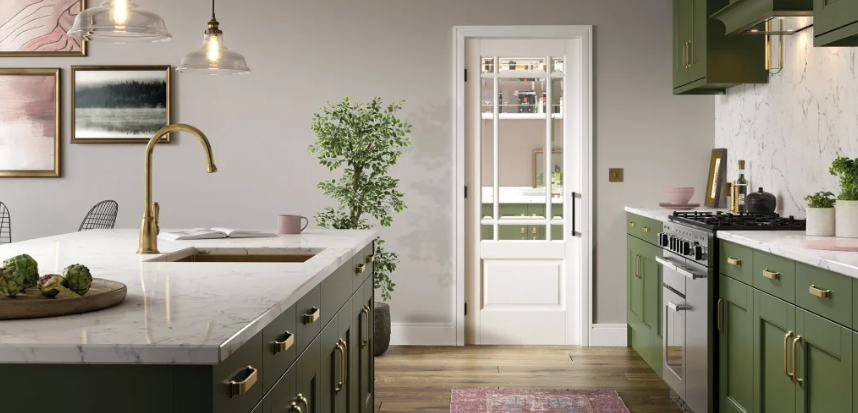
As autumn gives way to winter, the light inside your home can change quickly and dramatically. Once the clocks go back, you’ll be faced with darkening afternoons, earlier sunsets and fewer daylight hours to enjoy. But that’s not all. The shrinking daylight can end up leaving hallways feeling gloomy, dining rooms lose their appealing brightness, and living spaces that felt airy at the height of summer start to look more shadowy and enclosed. And with much more time spent indoors, making the most of available natural light becomes essential.
Internal glazed doors offer a practical way to share daylight between adjoining spaces. Their glass panels allow light from a brighter room to reach areas beyond the doorway - even when the door is closed. This can be particularly helpful where a hallway, landing or dining room has limited natural light of its own. Instead of keeping doors open throughout the day, you can maintain a practical division between rooms while still allowing light to flow easily from one room to another.
There is also plenty of scope to match your glazed doors to your home’s individual character. Clear glazing creates a visual connection between rooms, while frosted glass softens the view where more privacy is required and still allows diffuse light to pass through. White glazed doors can complement a minimalist interior, oak brings richness and warmth, and black industrial styles give the doorway a bolder and more defined appearance. Choosing the right combination of glass, finish and panel layout can make a darker space feel more welcoming without changing its style, theme or purpose.
However, the best results depend on where you install the door and what you expect it to achieve. Glazing cannot create daylight where none is available, and a door between two poorly lit rooms may make less difference than you hoped. Choosing clear glass without considering privacy, or ordering without checking dimensions and installation requirements, can also lead to an unsuitable purchase.
In this guide, Door Giant explains exactly how to brighten your rooms in winter with our Glazed Doors range. We’ll help you identify where glazed doors can be installed, what glazing type you should go for, how to check your dimensional requirements and much more.
Start by looking at how natural light moves through your home during a typical winter day. A living room with a large window may be relatively bright, while the hallway immediately outside remains dim behind a solid door. Replacing that door with a glazed design gives some of the available light a route into the adjoining space. The improvement will depend on the window’s position, the doorway’s location and anything blocking the path between them. Prioritise openings that connect a darker area to a genuinely brighter room.
Your choice of glazing affects both the view through the door and the character of the light passing through it. Clear glass suits spaces where you want an open visual connection, such as a kitchen and dining room or a living room and hallway. Frosted or etched glass obscures that view while allowing light through, making it useful where a degree of privacy matters. However, obscured glazing does not necessarily conceal silhouettes or movement completely, particularly when one side is brightly lit. Consider how the room is used in the evening as well as during daylight hours.
The size and arrangement of the glass panels influence how much of the doorway is available for light to pass through. A large glazed panel generally offers more exposed glass than small inserts, although the actual result also depends on the glazing and the light reaching it. White frames can sit comfortably within pale interiors, while oak adds natural texture and a touch of traditional charm. Black industrial glazed doors create stronger visual lines and can work well where you want the door to be a feature.
Compare the amount of glass alongside the style, rather than choosing by colour alone.
Glazed internal doors work best when the surrounding room also makes good use of available light. Pale walls and lighter ceilings can help reflect it, while dark finishes and bulky furniture may leave parts of the space feeling shaded. A carefully positioned mirror can reflect a brighter view, but its effect depends on what it faces. Keeping windows and door glazing clean also helps preserve a clear passage for daylight. Once the evening arrives, well-placed lamps and ceiling lights remain essential for making the room comfortable and usable.
A glazed door needs to fit the opening correctly and suit the requirements of its location. Check the required width, height and thickness, along with the condition of the frame and the clearance above your flooring. Trimming allowances vary between products, so never assume a door can be cut down by any amount. Where a fire door is required, choose an appropriately certified glazed fire door and have it installed in accordance with its certification and manufacturer’s instructions.
Careful preparation helps you avoid ordering a door that looks right online but cannot be fitted correctly.
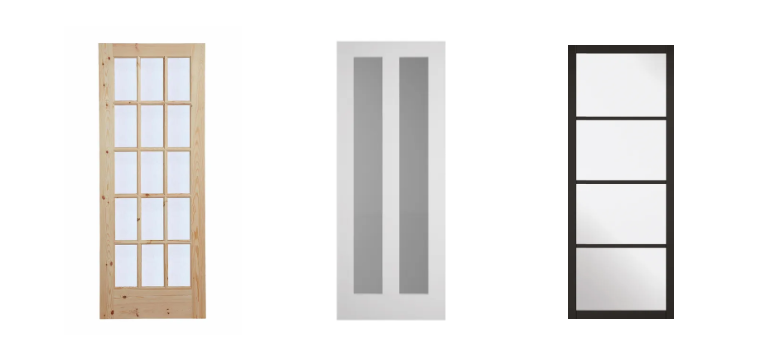
Our Traditional Knotty Pine 15 Light Obscure Glazed Internal Door combines the character of solid pine with obscure glass, allowing light to pass between rooms while offering a degree of privacy. For a simpler look, the Door Giant Shaker-Style White Primed 2 Light Glazed Internal Door features two clear glazed panels and comes ready to paint in your colour of choice.
If you prefer an industrial style, the LPD Soho Black Pre-Finished Clear Glazed 4 Light Internal Door pairs a striking black frame with four clear glass panels, creating a visual connection between adjoining spaces. Whether you want rustic charm, clean lines or a bold feature, our range gives you plenty of ways to bring natural light and character into your home.